Convert PDF to Excel -Quick, Accurate and Step by Step
In the digital era, it is important to have efficient data management. Regardless of whether you are a businessman, a student or an entrepreneur, you usually have to deal with PDF documents that have significant tables, invoices, reports or financial information. The conversion of PDF to Excel will enable you to extract information of the static PDFs into spreadsheets which can be easily edited to perform calculations, analysis and reporting.
We will discuss all the aspects of PDF to Excel conversion: the tools, the methods, the best practices, the errors that should be prevented, and the most common questions. At the end, you will know how to transform PDFs to Excel easily wasting less time and increasing accuracy.
What is PDF to Excel Conversion?
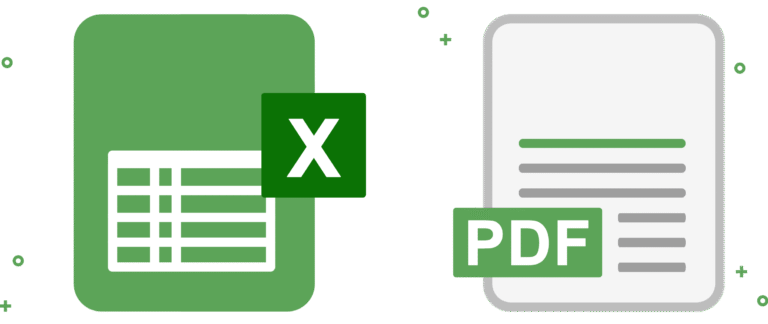
The conversion of PDF to Excel is the process to extract tabular data content in a PDF and save it in an Excel spreadsheet (XLS or XLSX). In PDFs, they are static files that are not very easy to edit or analyze directly, whereas in Excel:
- Editing and formatting data
- Implementation of formulas and functions.
- Producing charts, graphs and pivot tables.
- Organizing large datasets
As an example, a PDF of sales reports, invoices, or survey results can be converted to Excel so that it can be computed and analyzed easily.
Why Convert PDF to Excel?
The importance of PDF to Excel conversion has some reasons:
- Editable Data: PDF files are difficult to edit, whereas it is possible to edit spreadsheets fully in Excel.
- Data Analysis: Deal with numbers by formula, chart, and pivot table.
- Time-Saving: Do not need to enter huge datasets manually.
- Accuracy: minimise the mistakes that are due to manual copying of data.
- Professional use: Develop business analytics, dashboards and reports effectively.
- Enhanced Structuring: Zip several PDF reports together to a single spreadsheet to analyze.
Ways of converting PDF to Excel
Three provides the possibility to convert PDF to Excel: online tools, desktop software, and mobile applications. Both have their merits in regard to your needs.
1. Converters PDF to Excel Online
Quick Conversion Online converters can be used when there is a one-time job. Popular options include:
- Smallpdf
- iLovePDF
- PDFCandy
- Adobe Online PDF Converter
Online Instructions:
- Access the site of converting it online.
- Upload your PDF file.
- Select Excel ( XLS/XLSX) as output version.
- Click Convert and save the converted file.
Advantages:
- No installation required
- Quick and easy
- Works on any device
Disadvantages:
- Free accounts have a limit on file size.
- Risk to privacy in case PDF has sensitive information.
2. Desktop Software
Large files, sensitive information or regular conversions are better suited to desktop software. Recommended tools include:
- Adobe Acrobat Pro
- PDFelement
- Nitro PDF
- Foxit PDF Editor
Steps:
- Open PDF in the software.
- Choose Export PDF > Excel.
- Tilting of table settings and formatting.
- Save as XLS or XLSX.
Advantages:
- Better precision of complicated tables.
- Batch conversion support
- Works offline and securely
Disadvantages:
- Software normally needed to be paid.
- Minimal training requirements among new students.
3. Mobile Apps
Mobile apps are handy when it comes to on-the-go conversion. Recommended apps:
- Adobe Scan
- iLovePDF App
- CamScanner
- OfficeSuite
Steps:
- Install the PDF by opening the app.
- Select Convert to Excel.
- Make modifications to settings (table detection, orientation).
- Share or save the converted Excel file.
Advantages:
- Convert anytime, anywhere
- Important to invoices, receipts and scanned documents.
Disadvantages:
- Minimal support of bigger files.
- Some of the apps need the internet connection of May.
Guidelines to PDF to Excel Conversion Accuracy
- Use PDFs of high quality: Make sure that your text and tables are clear in PDF.
- Check Table Structures: Structured tables give cleaner excel sheets.
- Choose the Proper Tool: A few converters work with complicated tables more effectively.
- Check Converted Files: Check formulas, Merged cells and formatting.
- Protect Your Files: Offline desktop software can be used in case of confidential PDFs.
- Setting Adjustments: Scan PDFs with OCR (Optical Character Recognition).
- Optimize Large Files: Split large PDFs into smaller parts where necessary.
Common Mistakes to Avoid
- Disregarding Table Formats: Aligned tables create untidy Excel sheets.
- Shortcut: Never ignore the converted file without checking it.
- With Native Low-Quality PDFs: Text or images are blurry and make it less accurate.
- Only using the Online Tools to store Sensitive Data: It is subject to security attacks.
- Ignoring OCR on Scanned PDFs: Scanned PDFs will fail to convert well without OCR.
Real-Life Use Cases
- Accounting / Finance: Transform invoices, balance sheets and tax reports to analyze them.
- Business Analytics: Extract sales, revenue, and performance data of PDF reports.
- Education & Research: Convert survey data or academic data to be calculated.
- Personal Use: Monitor personal receipts, budgets or expenses.
Benefits of PDF to Excel Conversion
- Time-Saving: Process automation of data input.
- Enhances Accuracy: Minimizes human errors.
- Data Analysis: Easy to apply formulas, pivot tables and charts.
- Professional Presentation: Develop spreadsheets that are well structured and can be edited.
- Cross-Platform Support: Supported on Windows, MacOS, Android, and iOS.
Most of the time, those questions come up on the list of frequently asked questions (FAQs)
Q1: Is it possible to convert scanned PDF to Excel?
Yes, OCR-enabled software such as Adobe Acrobat or iLovePDF.
Q 2: Do online converters provide security to confidential information?
Desktop software is most secure compared to online tools in case of sensitive files.
Q3: Are it possible to convert several PDFs to a single Excel file?
Yes, there are numerous desktop applications that can help an organization convert several PDFs at a time or merge them.
Q4: Will formatting be maintained?
Tables are maintained by most of the contemporary tools, although very complicated layouts might require minor changes.
Q5: What are some of its Excel formats?
The XLS and XLSX are extensively compatible tools wise.
Q6: Is it possible to convert PDF offline to Excel?
Yes, desktop software such as Adobe Acrobat, PDFelement and Foxit can be converted offline.
Q7: What is the best way to reduce the errors in transformed Excel files?
Use PDFs of high quality, monitor the structures of the tables and use OCR on scanned documents.
Conclusion
Learning to convert PDF to Excel is highly important to a person who handles data on a regular basis. The correct tools, the best practices, and the inspection of the converted files will help you save time, minimize the error rate, and make your workflow far more efficient. No matter who you are a professional, student or an entrepreneur, PDF to excel conversion will ease data management.
To get more productivity tricks, web tools and useful tutorials, go to Viral Tip Online to make your online activities better and quick