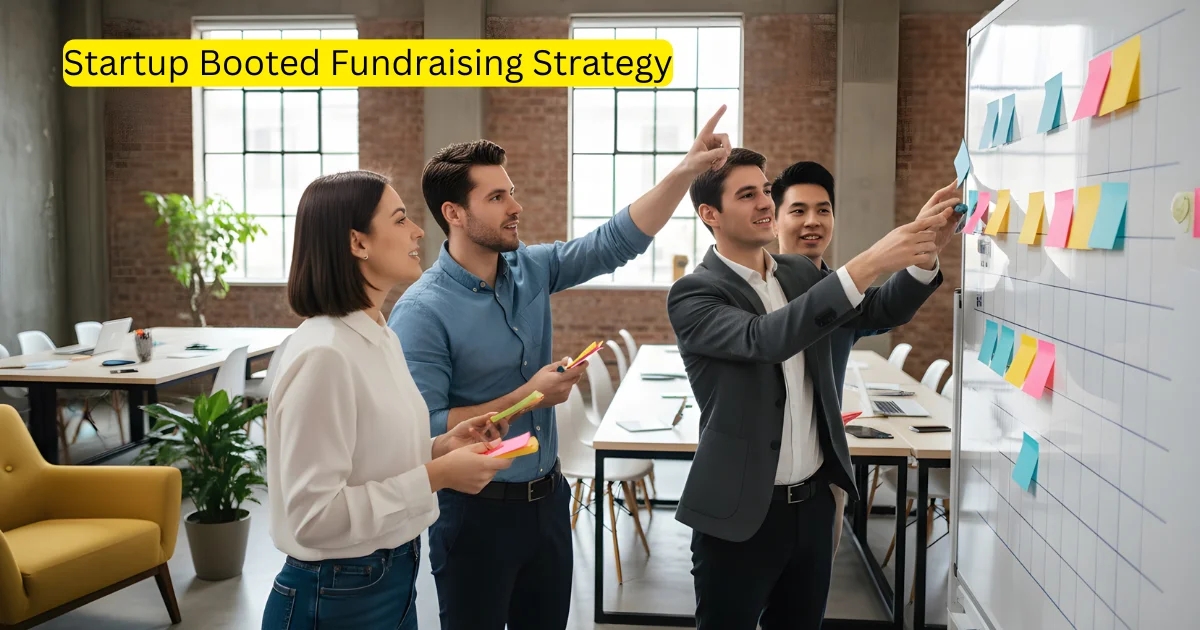
Startup booted fundraising strategy: Grow Without Investors
Bringing up a business with no external capital may seem intimidating in a startup ecosystem of venture capital and fast fundraising rounds. Success stories appear to be everywhere, which seems to be attached to investors and huge valuations. Nonetheless, a significant number of successful and sustainably profitable firms demonstrate that an expanded fundraising can be an effective, though less sustainable, strategy to be adopted by a startup.
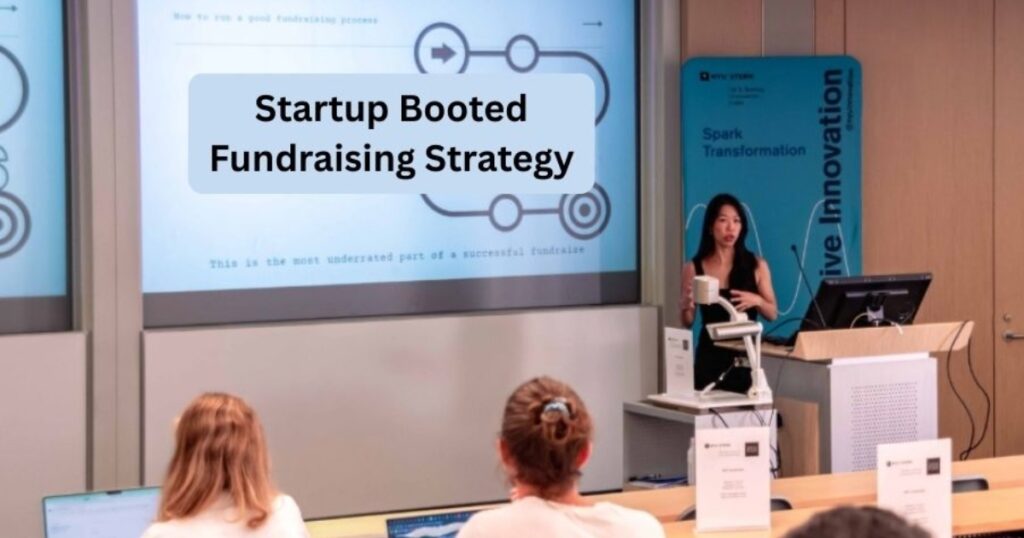
Bootstrapping is not a corner cutting or growth avoiding activity. It is the intentional construction, being economically responsible and paying much attention to the customer value. This paper discusses the role of founders in a startup booted fundraising strategy in implementation as a way of idea validation, generating revenue at an early stage, and managing cash flow and scaling the way they choose.
What Does a Startup Booted Fundraising Strategy Mean?
A startup booted fundraising strategy is a business model of expanding a company through the usage of personal savings, initial customer income, or internal funds instead of venture capital or angel investors. Founders are concerned with earning money first as opposed to raising money first. Ownership and control is one of the greatest benefits of this strategy. The founding members have the ultimate power in decision making and are not coerced by investors to pursue aggressive growth and early exits. The expansion occurs through natural means with actual customer demand.
Another fundamental advantage is efficiency. Scarcity of capital makes founders focus on what really counts, cut unnecessary costs, and prove ideas within a short period of time. In the long-term, this field will develop a better foundation than most of the startups that are over-invested.
You may also read latest news mygreenbucks.net.
Reasons Founders Use a Booted Fundraising Strategy
External funding is deliberately avoided by many entrepreneurs as it tends to take the focus of an entrepreneurship out of customers and on the investors. Measures, valuations, and timescales may lead founders to forget about developing a meaningful product. To provide decisions aimed at the long-term sustainability, a startup booted fundraising strategy enables the founders to remain in the same vision when first established. Value creation is what drives growth and not expectations of investors.
Financial risk is also minimized by bootstrapping. Raising massive amounts of money increases rate of burning and reliance on subsequent financing rounds. Bootstrapping startups get to know how to make ends meet in a constrained scenario, which makes them stronger in case of economic crisis.
The Psychology of Being a Bootstrapped Success
The right attitude is the beginning of successful startup booted fundraising strategy. Founders are forced to change their raise money mindset to a prove value mentality. Pitch decks are not as important as real problems, real customers and real revenue. Bootstrapped growth can be slower initially, but it is much more stable. It is confusing to compare progress with VC-funded startups, where a high rate of initial growth is accompanied by untold turmoil.
Limitations are to be viewed as an asset. Resource scarcity compels founders to create, automate, and come up with smarter deals. This attitude is eventually a strong competitive advantage.
How to Prove a Business Idea without External Funding
In any booted fundraising strategy that is a startup, validation is essential. Lacking investor funds to be a cushion, founders need to make the idea provide a solution to a real and urgent issue. Bootstrapped founders do not create an ideal product but rather create simple and minimum viable solutions. These rough prototypes have to test assumptions fast with initial revenue being generated.
Customer feedback emerges as the greatest asset. The constant listening and trial will make the business less wasteful and make sure the business develops based on the actual market requirements- not what the investors think.
Revenue-First Growth: Bootstrapping Guts
Any startup booted fundraising strategy runs on revenue. In contrast to funded startups where the company spends money to attract users, bootstrapped companies base growth based on early monetization. To get cash flow many founders begin with services, consulting or freelancing. These models also have profound understanding of customer pain points which in future give rise to scalable products.
Subscriptions or retainer recurring revenue models are particularly potent. Foreseeable revenue enhances financial planning and enables founders to reinvest returns excluding ownership.
Cash Flow Planning by Bootstrapped Founders
A startup booted fundraising strategy depends on cash flow as its lifeline. Bad management of cash may close down the business in no time without investors to take up mistakes. Effective bootstrapped entrepreneurs are cost conscious in their expenses and maintain low fixed costs. Rather than large inside teams and redundant tools, automation, freelancers, and lean operations are used instead.
Rapid cycles of payments are also important. Pre-funding, advance invoice and milestone-based billing enhance access to more liquidity and less financial pressure and provide founders with more strategic options.
Assembling a Team without Fat Payroll
One of the largest issues in a startup booted fundraising approach is hiring. Founders are forced to recruit gradually and carefully, as they do not have many funds. Early teams are traditionally small, multi-purpose, and goal-oriented. Outsourcing contractors and part-time experts will offer some flexibility and keep payroll within reach.
With increased revenue, teams are able to become full-time. A well-established culture and alignment can beat larger teams in big-budget companies.
How to Market on a Shoestring budget
Limited resources in marketing cause creativity, which is one of the characteristics of effective startup booted fundraising plans. Founders rely on organic channels as opposed to paid advertising. Long-term growth is driven by content marketing, search engine optimization, emailing, partnerships, and community building. Such approaches need consistency and not big budgets.
Word-of-mouth is a very important factor. Great customer experiences make users become evangelists, which allows bootstrapped startups to compete with significantly larger brands.
How to Grow Big and Still Be Independent
Scaling in the booted fundraising strategy in a startup is a premeditated and statistically-based method. Founders grow when demand is validated and the systems are not volatile. Billing, customer support and analytics automation tools minimize operational risk and manual work. This enables founders to concentrate on strategy and not on day to day fire fighting.
Bootstrapped founders have bargaining power even when external funding becomes a possibility in the future, as they are able to select partners that are aligned to their values.
Lasting Advantages of a Booted Fundraising Strategy of a Startup
There are other advantages of bootstrapping other than profits. Founders build up resilience, discipline and actual business skills, not only fundraising skills.
Bootstrapped startups are more likely to become profitable sooner and have better margins. This provides the freedom to invest back, to shift or develop at a comfortable rate.
Above all, corporations established based on a startup booted fundraising plan are more sustainable, flexible, and resilient in the long-term.
Frequently Asked Questions of Startup Booted Fundraising Strategy
What is a startup booted fundraising strategy simply put?
It involves a startup being expanded with personal money and its customer income rather than with the help of an investor.
Better than venture capital, is bootstrapping?
It depends on goals. Bootstrapping provides the control and stability whereas venture capital allows scaling faster but dilute ownership.
Do startups bootstrapped succeed in scale?
Yes. Most of the bootstrapped businesses become multi-million dollar businesses by being disciplined in their execution.
What are the largest obstacles of a booted fundraising plan?
Less capital, lesser growth in the initial years, and more individual accountability, but more fundamentals.
At which point does an externally-funded startup think about acquiring external funding?
Proven revenue is a time that the systems are stable, and funding can be used to speed up growth without damaging control.
Final Thoughts
A startup booted fundraising strategy is not just a financial decision, but a business philosophy of creating businesses purposefully and autonomously. Founders build stable and resilient companies by focusing on revenue, customer value and disciplined growth.
Although this can be much more waiting in the initial phases, bootstrapping can lead to deeper roots and better long term direction. Bootstrapped startups are silently proving that success is not necessarily about the money that you raise.
Also read more information.